
Hi Bourbon enthusiast
You must be 21 or over to enter this website. If you're not old enough to drink, then you're not old enough to read Breaking Bourbon.
Please read and drink responsibly.
You must be 21 or over to enter this website. If you're not old enough to drink, then you're not old enough to read Breaking Bourbon.
Please read and drink responsibly.

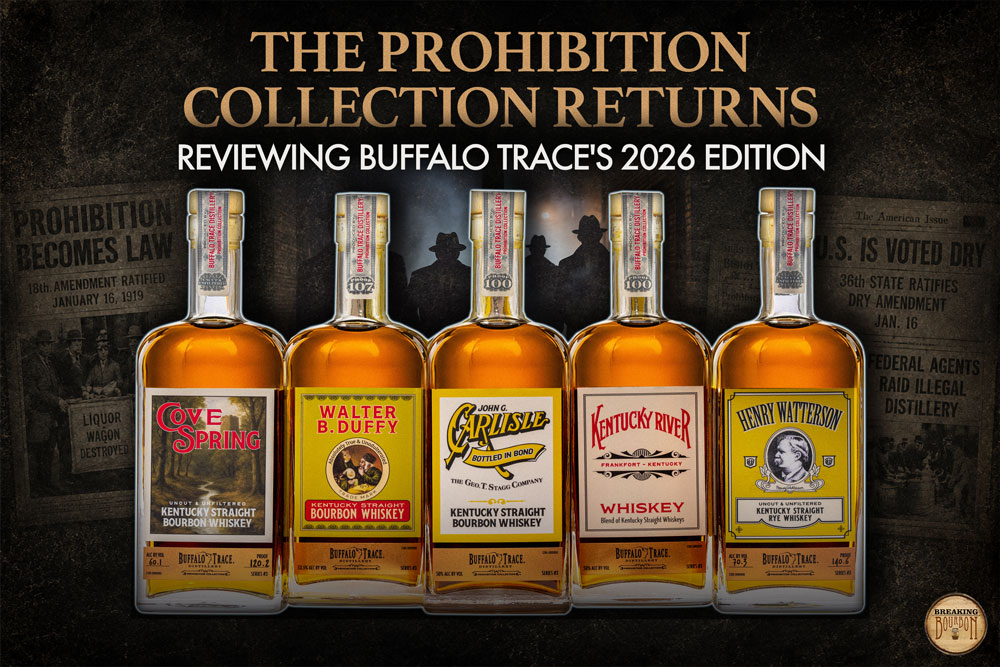
In October 2023, Buffalo Trace announced The Prohibition Collection. This annual limited edition, multi-bottle collection was created to honor the whiskeys that were legally produced and sold at the site of the Buffalo Trace distillery during “arguably the most contentious time period in alcohol history,” according to the company. This period of Prohibition, which ran from 1920 to 1933, is often still referenced to this day. Six distilleries were granted licenses by the U.S. Government to legally bottle medicinal whiskey for sale with a prescription. The Buffalo Trace Distillery, though it operated under the George T. Stagg Distillery name at the time, was one of those distilleries.
The first set in 2023 paid homage to five brands with roots in the era. It included five whiskeys: four bourbon and one rye. Each bottle was 375mL, and the Prohibition collection was sold only as a set of five for $1,000. Buffalo Trace followed up the first collection with the release of Prohibition Collection Series #2 in January 2025. Similar to the first release, this collection was once again composed of five 375mL bottles and priced at $1,000.
Now in its third iteration, the company is once again paying homage to Prohibition. Following in the footsteps of the earlier releases, Prohibition Collection #3 contains five 375mL bottles and is also priced at $1,000. At this point, if you’re asking why the bottles have always been 375mL only, it’s because they are meant to recreate the look and scale of their Prohibition-era predecessor. Buffalo Trace Distillery Master Distiller Harlen Wheatley states that “Each year, we uncover stories, brands and whiskey traditions that might otherwise have been lost to time. By reimagining these historic whiskeys, we honor the resilience, ingenuity and determination that carried this Distillery through one of the most challenging periods in American whiskey history and helped shape the legacy we continue today.”
Specifically, this year’s collection honors five historic brands bottled under President Albert B. Blanton’s leadership at George T. Stagg Distillery. We had a chance to dive into this year’s collection, which is composed of three bourbons, one rye, and one whiskey, to see if the high asking price is worth it for consumers. While some of the collection is just good, others, such as the near HAZMAT proof rye, are downright exceptional.
You can find full tasting notes, thoughts, and ratings for each whiskey in this Collection below.
Classification: Straight Bourbon
Company: Sazerac Company Inc.
Distillery: Buffalo Trace
Release Date: June 2026
Proof: 120.2
Age: NAS (Aged at least 4 years per TTB regulations)
Mashbill: Undisclosed (Wheated recipe)
Color: Copper
SRP: $1,000 / Set of five 375mL bottles (2026)
Find at Frootbat
Nose: Cinnamon spice | Hot pepper | Caramel | Cherry | Bold
Palate: Warming baking spices | Cherry | Caramel cream candy | Vanilla custard | Touch of raisin | Rich
Finish: Caramel apple | Cinnamon stick | Toasted oak | Long, spicy finish
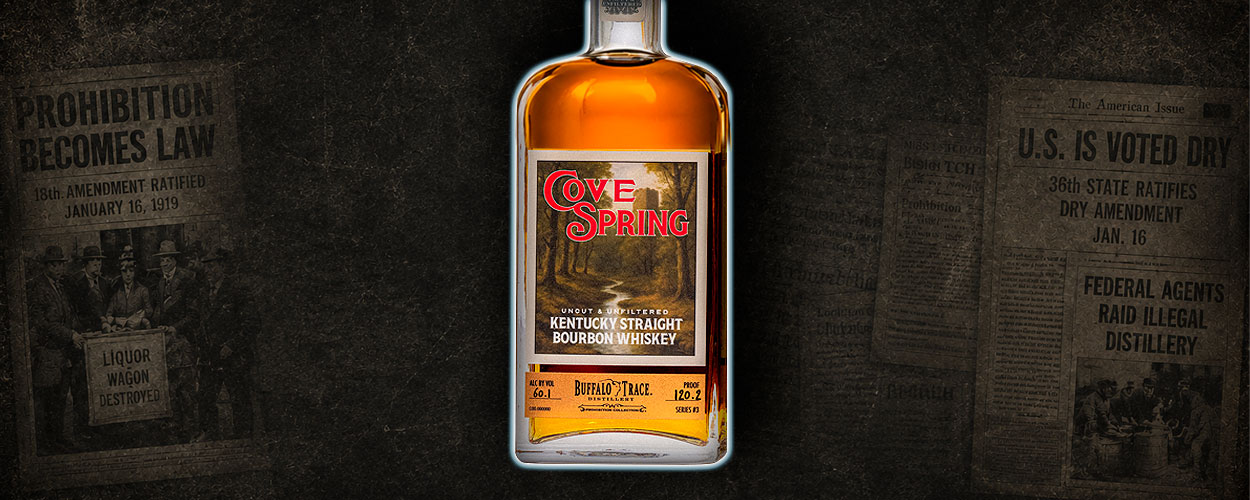
Cove Spring Straight Bourbon is named in honor of the spring that fueled the distillery’s earliest growth. In 1804, the spring became part of Frankfort’s first public water system, where a stone retention dam, reservoir, walled spring, and overflow tower were constructed. The Kentucky Office of Nature Preserves describes it as the “first public water supply west of the Allegheny Mountains.” Cove Spring supplied water to Leestown and the operation that eventually became the O.F.C. Distillery.
Distilled from a wheated recipe and bottled at cask strength, Cove Spring appears similar on paper to Buffalo Trace’s William Larue Weller Bourbon or Weller Full Proof. The former is part of the annual limited edition Buffalo Trace Antique Collection, and the latter is an ongoing release. However, because the exact mashbill and age are not provided and much of the flavor is driven by the barrels chosen for the blend, it’s also not accurate to say they’re the same.
Cove Spring is a bold bourbon, with waves of cinnamon spice, hot pepper, caramel, and cherry on the nose. The intensity in the aroma pours into the sip, which starts with warm baking spices up front, followed by cherry, caramel cream candy, vanilla custard, and a touch of raisin on the backend. Caramel apple, cinnamon stick, and toasted oak on the finish give way to lingering spice that retains a high level of intensity for a while before finally trailing off.
From a flavor profile perspective, Cove Spring is very similar to William Larue Weller, most notably due to the cherry note, which I pick up more in William Larue Weller compared to Weller Full Proof. Warming baking spices and cinnamon are the most obvious supporting common threads, though not the only ones. The intensity of the spice in the sip takes Cove Spring in a slightly different direction, but by comparison it’s a similar overall drinking experience. While I do enjoy the heavy spice element, it does take over the sip as it progresses, overshadowing the potential depth of the whiskey. Overall, it’s a great pour and maybe the least controversial in the Prohibition Collection this year, landing on solid ground that just about anyone who enjoys a barrel proof wheated bourbon pour will find enjoyable.
Classification: Straight Bourbons
Company: Sazerac Company Inc.
Distillery: Buffalo Trace
Release Date: June 2026
Proof: 107
Age: NAS (Blend of 10 and 14 year old bourbons)
Mashbill: Undisclosed
Color: Dark Yellow Gold
SRP: $1,000 / Set of five 375mL bottles (2026)
Find at Frootbat
Nose: Poached pear | Vanilla | Whipped caramel cream | Gentle oak | Cinnamon apple | Faint graham cracker | Baking spices | Warming aroma
Palate: Cinnamon stick | Golden raisin | Oak | White peppercorn | Leather | Gentle rye spice | Faint brown sugar
Finish: Rye spice | Charred oak | Leather | Raisin | Baking spices
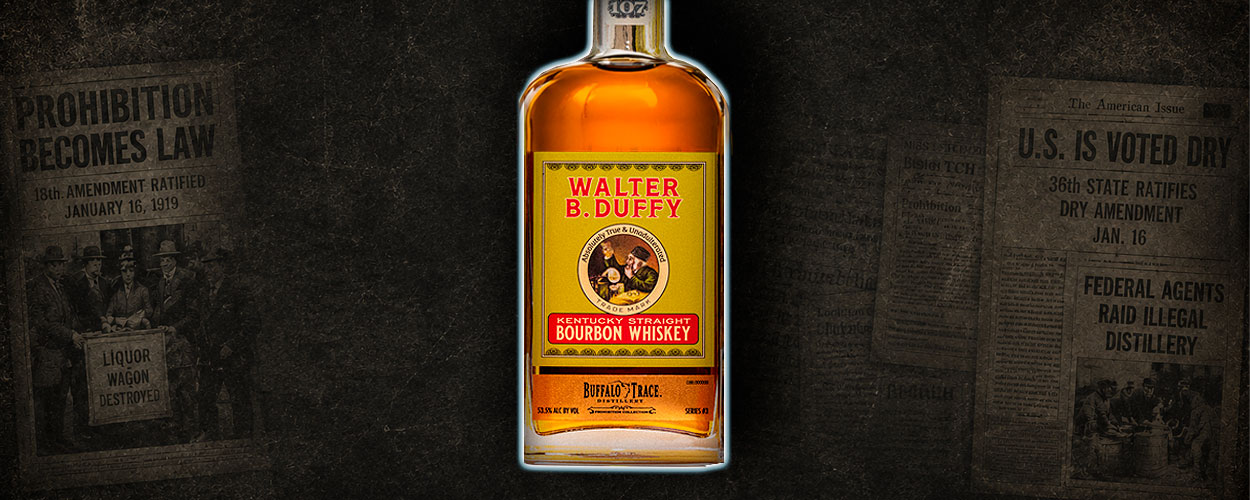
While the name George T. Stagg is well known, the name Walter B. Duffy doesn’t hold the same weight. Duffy became the owner of the O.F.C. Distillery after the death of Stagg in 1893. Duffy wouldn’t operate in Kentucky; instead, operating from New York, Duffy hired Albert B. Blanton to oversee the distillery’s operations. In 1921, Duffy went on to name Blanton president of the distillery.
The whiskey opens with a warming aroma focused on delightful scents of poached pear, cinnamon apple, vanilla, and whipped caramel cream. Scents of gentle oak and baking spices transition to cinnamon stick, oak, and leather at the midpoint. A golden raisin note adds intrigue, while gentle spice makes itself known and maintains similar intensity into the finish. Rye spice, charred oak, leather, and raisin round out the sip.
Having a base of 10 and 14 year old bourbons to blend with from Buffalo Trace Distillery would leave most consumers to believe they’re in for a treat. In actuality, this is only partially true when it comes to Walter B. Duffy bourbon. While the nose is the highlight, the rest of the sip can’t match the same level of delivery. The midpoint is pleasing but begins to lose steam, while the finish is more straightforward than expected. In the end, purchasers of the Prohibition Collection receive a nicely balanced blended bourbon; however, for the price, they’ll be expecting a lot more.
Classification: Straight Bourbon
Company: Sazerac Company Inc.
Distillery: Buffalo Trace
Release Date: June 2026
Proof: 100
Age: NAS (Aged at least 4 years per TTB regulations)
Mashbill: Undisclosed
Color: Honey
SRP: $1,000 / Set of five 375mL bottles (2026)
Find at Frootbat
Nose: Bright stone fruit | Funky oak | Sweet caramel | Crème brûlée | Beautiful aroma
Palate: Vanilla custard | Brown sugar | Leather | Stone fruit | Funky oak | Bright & lively
Finish: Flash of spice | Aged oak | Caramel | Brown sugar | Medium length
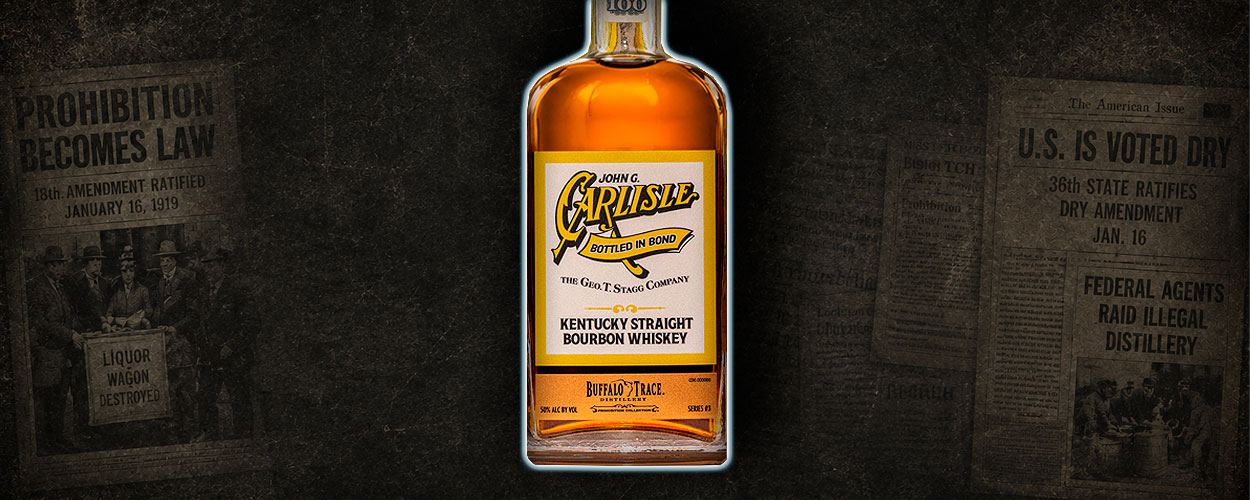
Buffalo Trace’s John G. Carlisle Straight Bourbon is meant to honor Carlisle’s role in the historical passage of the Bottled-in-Bond Act of 1897. John Griffin Carlisle was one of the most influential Kentucky politicians in the late 1800s. He served in the Kentucky legislature, as lieutenant governor, represented Kentucky in the United States House of Representatives, became speaker of the House from 1883-1889, served in the United States Senate, and was President Grover Cleveland’s Secretary of the Treasury from 1893-1897. Carlisle and Colonel E. H. Taylor, Jr. were friends and political allies, joining Carlisle’s political power with Taylor’s whiskey-industry influence. Their relationship predates the Bottled-in-Bond Act by nearly two decades, when in 1879-1880 Taylor built a second distillery beside the O.F.C. Distillery and named it the Carlisle Distillery in honor of John Carlisle. Taylor eventually championed the Bottled-in-Bond Act, while Carlisle provided important political support that helped see it through.
The bourbon is a classic affair, and while there is little detail provided, including age, the flavor profile is reminiscent of the most recent release of Eagle Rare 17 Year, with a beautiful aroma and balance of funky oak and bright fruit sweetness. It starts with an aromatic mix of bright stone fruit, funky oak, sweet caramel, and crème brûlée on the nose. Sweet flavors land first on the palate, with vanilla custard and brown sugar, but they are quickly met with savory leather and funky oak. A stone fruit note mingles in and helps bring some bright liveliness to the otherwise classic mix. The sip concluded with a flash of spice, aged oak, caramel, and brown sugar.
John G. Carlisle Straight Bourbon is one of the two lower proof bottles in this year’s Prohibition Collection. Its lower relative proof combined with lack of an age statement or even mention of its age leaves consumers with little to go by, and even less to draw them in relative to other bottles in the collection. However, I found John G. Carlisle Straight Bourbon’s execution to be really well done with its beautiful aroma and classic Kentucky straight bourbon flavor profile. It’s not the high proof, intense pour that gets people talking right away, but rather the subtle, classic pour that has you coming back for more.
Classification: Blend of Straight Whiskeys
Company: Sazerac Company Inc.
Distillery: Buffalo Trace
Release Date: June 2026
Proof: 100
Age: NAS (Aged at least 4 years per TTB regulations)
Mashbill: Undisclosed
Color: Amber
SRP: $1,000 / Set of five 375mL bottles (2026)
Nose: Floral undertone | Pear | Pastry | Honey | Cinnamon | Aged oak | Light but inviting
Palate: Cinnamon bun | Baking spices | Tropical fruit | Bright & lively | Mouthcoating
Finish: Wave of baking spices | Light cinnamon | Sandalwood | Lingering spice | Short
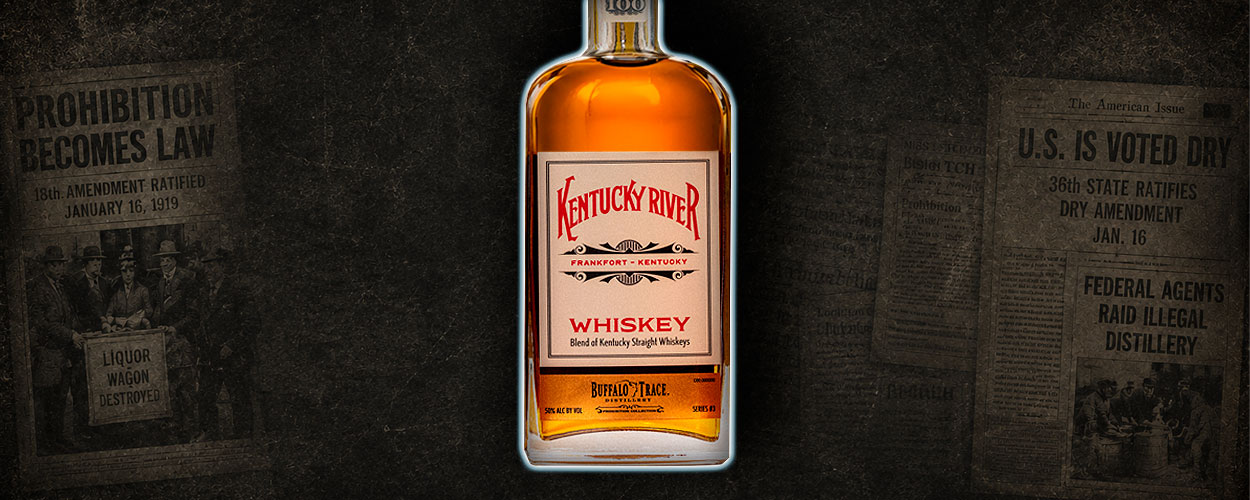
Kentucky River is a blend of straight whiskeys that pays homage to the former Kentucky River Distillery. The distillery was previously known as the Carlisle Distillery before it was rebranded the Kentucky River Distillery in 1898, where it was primarily used to make a less expensive grade of whiskey. Located next to the O.F.C. Distillery on what is now Buffalo Trace’s Frankfort campus, the two distilleries were later operated as part of the George T. Stagg complex under Albert B. Blanton’s leadership.
The whiskey starts with an inviting yet light aroma with a floral undertone that’s joined by pear, pastry, honey, cinnamon, and aged oak. The palate is where this whiskey comes to life, livening things up with cinnamon bun, baking spices, and tropical fruit delivered with a satisfying mouthcoating format. A wave of baking spices combines with light cinnamon, sandalwood, and lingering spice on the finish, which drops off fairly quickly.
Kentucky River is a blend of straight whiskeys, with little additional information provided. The components could be any type of whiskey; various types of bourbon (for example, wheat or rye as the secondary grain), rye, wheat whiskey, etc. Kentucky River is actually a really enjoyable pour, with a bright liveliness underscored by ample fruit, spice, and floral notes. It has an “everyday drinker” kind of vibe to it, as it’s tasty right out of the gate and doesn’t make you question whether you want another pour – you know immediately that you do. However, it doesn’t move the needle enough to make it remarkable or justify its price, instead focusing on drinkability over a more memorable overall flavor profile.
Classification: Straight Rye
Company: Sazerac Company Inc.
Distillery: Buffalo Trace
Release Date: June 2026
Proof: 140.6
Age: NAS (Aged at least 4 years per TTB regulations)
Mashbill: Undisclosed
Color: Gold
SRP: $1,000 / Set of five 375mL bottles (2026)
Find at Frootbat
Nose: Cherry | Rich seasoned oak | Seared fresh mint | Orange rind | Caramelized brown sugar
Palate: Mint | Melted caramel | Rich charred oak | Vanilla extract | Milk chocolate | Cream soda
Finish: Rye spice | Dry-aged oak | Chocolate | Molasses | Brown sugar | Hint of lingering root beer
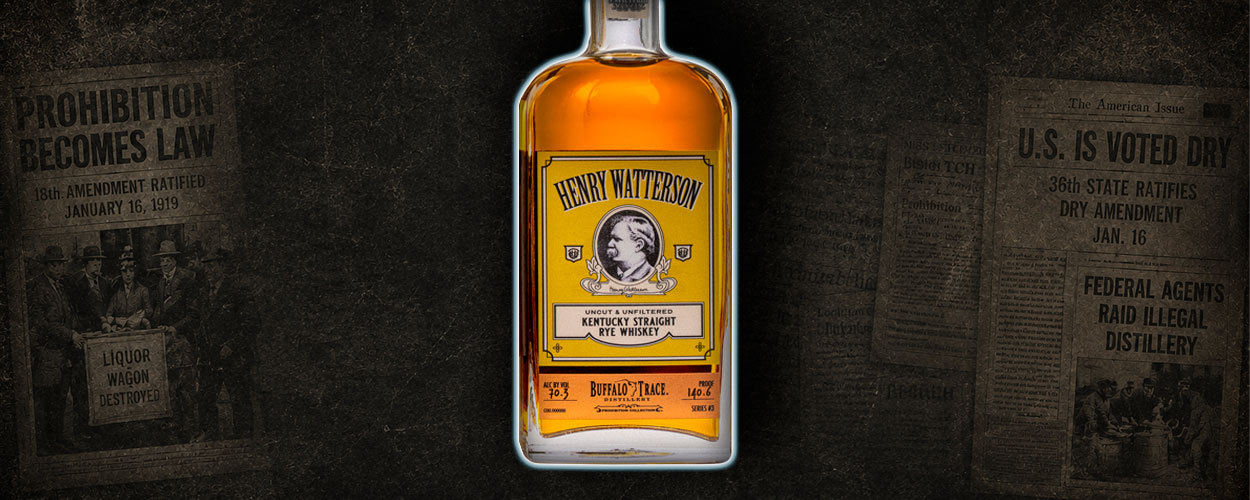
This rye is named after Henry Watterson, a U.S. Congressman and a Pulitzer Prize-winning journalist, known for his anti-Prohibition views. According to Buffalo Trace, “Because of his public support for distilleries and their products, Watterson’s likeness was used for a whiskey brand that was distributed by several companies, including the George T. Stagg Distillery.”
It’s not often one gets to taste Buffalo Trace distilled rye at HAZMAT proof, and that is the immediate draw for this release. Thankfully, it backs up its high proof with a delicious set of flavors. On the aroma, cherry makes its sole appearance, and it does the most it can with its limited time before rich, seasoned oak takes over. After that, seared fresh mint adds some welcomed earthiness, alongside orange rind citrus and rich caramelized brown sugar.
The palate is equally as rich, with a pop of mint before gooey melted caramel adds a layer of pure sweetness. Rich charred oak, vanilla extract, and milk chocolate all roll into a nostalgic cream soda note. The finish hits fast with a blast of rye spice, but the pop is short-lived before dry-aged oak, chocolate, molasses, brown sugar, and a hint of lingering root beer carry the rye to its conclusion.
Though the company’s Thomas H. Handy releases creep up in proof, Henry Watterson Rye is far from a carbon copy at a higher proof. It tastes unlike any rye the company has recently put out, and in a way, it's very much like George T. Stagg in terms of how it drinks. It’s big and bold, but well structured, delivering its flavors one right after another with clear distinction and impact. It’s surprisingly not as fruity or spicy as you’d expect, and instead dishes up notes that are more commonly found in high-aged bourbon. Make no mistake, it's a powerful rye with a strong rye backbone; it's just able to pull it back when needed to deliver a fantastic sipping rye.





.png)